First published in National Geographic Traveller India (Digital), January 2021
I suggest to my husband that we visit Thessaloniki as part of our Greek honeymoon. He sends my way a questioning glare that I quell with enticing tales of all the food we could eat there — it is after all Greece’s second city and gastronomic capital. What we don’t know yet is that Thessaloniki will prove to be so much more than that.
MUSEUM OF MEMORIES
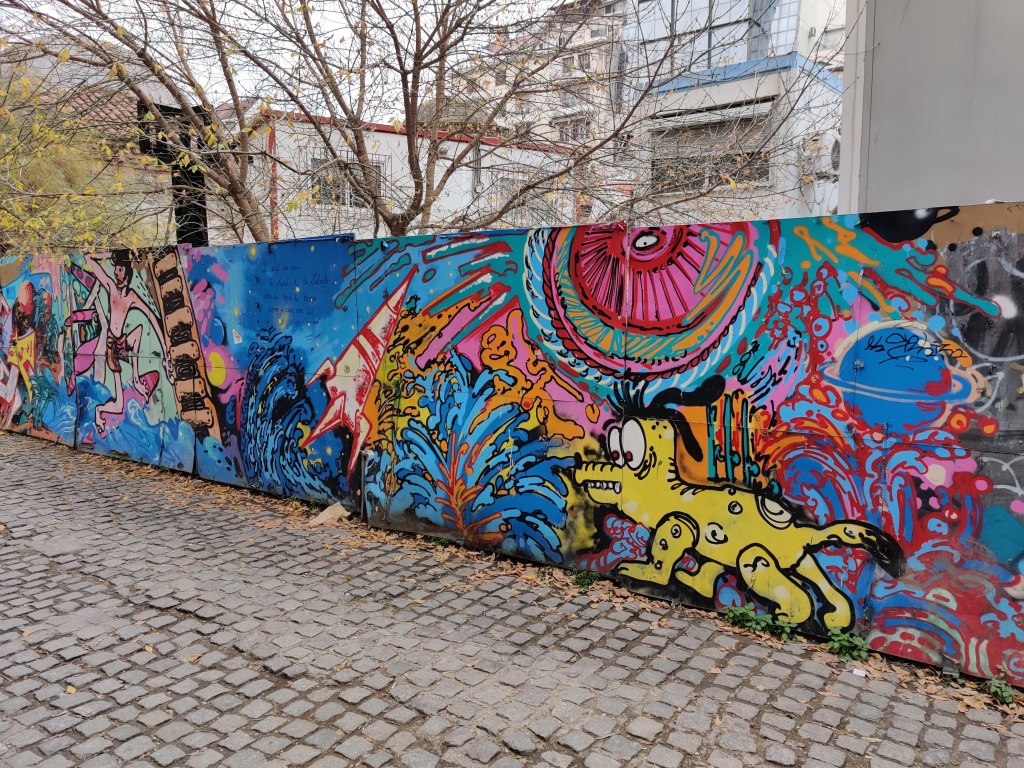
Like Athens, graffiti graces almost every street wall in Thessaloniki (also known as Salonica), some socio-political, others full of artistic rigour that beautifies drab walls in what we discover is a very walkable city. A minute’s amble from our hotel near the neighbourhood of Agiou Mina is the Jewish Museum of Thessaloniki (the city was home to the country’s largest population of Jews until the Holocaust). On the ground level is a passageway of headstones salvaged from the Jewish cemetery that was desecrated by the Nazis. We walk around and upstairs, taking in the history of Thessaloniki’s Jewry from the 13th century until after the Holocaust. An exhibit that leaves us without words relates stories of the Jews, including over 2,000 children, who were sent to Auschwitz.
A sombre hour later, we stop for a quick lunch at Kebab Grill in the city centre, where we gorge on scrumptious lamb and chicken gyros packed with fries and tzatziki. A 15-minute uphill climb is all we need to walk it off, for it’s time for our afternoon tour at the Church of Profitis Ilias in Ano Poli (Old Town). Built upon the ruins of old Byzantine palaces, the 14th-century church with its slightly tilted dome makes for a striking photo op.
A STROLL AND THE SKYLINE
Ano Poli is much quieter than the city centre, save for frisky stray cats that jump out at us at every turn. Our guide, Giorgos, leads us up and down steep roads, along monasteries, statues, buildings, and even the ancient Acropolis walls, belting out songs on his bouzouki. We trudge up to a hilltop for the secluded Church of Hosios David, whose pièce de résistance is an intricate mosaic above the altar.
The two-hour walk ends at the Monastery of Vlatadon, where we’re treated to a gorgeous view of the port city, enveloped by the clouds of a gloomy winter day. “No man will be without a homeland as long as Salonica exists,” Giorgos quotes Byzantine scholar Nikephoros Choumnos, as we take in the beauty of the city’s skyline. The blues of the Mediterranean Sea in the distance complete the portrait of posterity. A stone’s throw from the monastery is Byzantio Café, where cups of hot chocolate and strong Greek coffee mark the end of our Old Town journey.
Hungry for local fare, we head to Ladadika, the nightlife district, and check out a local favourite, Full tou Meze. We try small plates of dolmadakias (vine leaves stuffed with rice), sogania (baby white onions stuff with minced meat and nuts), kebab giaurtlu (lamb, veal and pork souvlakis), fava with toasted bread, grilled meatballs in a tomato sauce, and a platter of traditional Greek sweets called halva, and end the night with happy tummies.
AS ROMANS DO
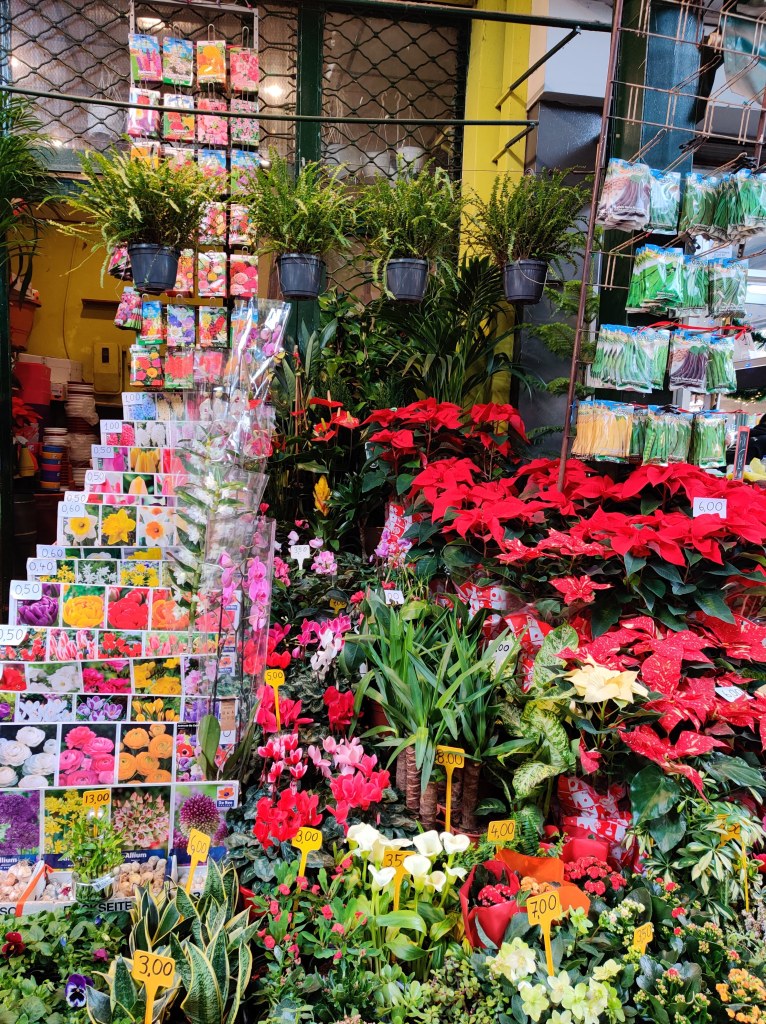
Fuelled by a hearty breakfast of Greek cheese, fruit, bread, cold cuts, juice and salad, we explore the city centre on our second day. If Ano Poli is home to Thessaloniki’s felines, the main area is the abode of stray dogs (who sometimes lead our way). Starting at the ever-busy Aristotelous Square that’s a five-minute walk from our hotel, we wind through the streets and arrive at Kapani and Modiano markets. Aromas of fresh meats and produce, candles, Greek cheeses, herbs, fruit, and flowers mingle with each other in the aisles. Two streets down lies the Roman Agora, a second-century ruin. We try to get used to Roman or Byzantine structures popping out of every other lane. A 10-minute stroll from the markets takes us to the imposing fourth-century Arch of Galerius built to honour the Roman emperor’s victory against the Persians. There’s also the Rotunda, built as a mausoleum for Galerius and later converted into a church. Two streets away, we come upon the ruins of the Palace of Galerius built at the turn of the Roman-Byzantine era, when the Emperor chose Thessaloniki as the seat of the eastern part of the Empire.
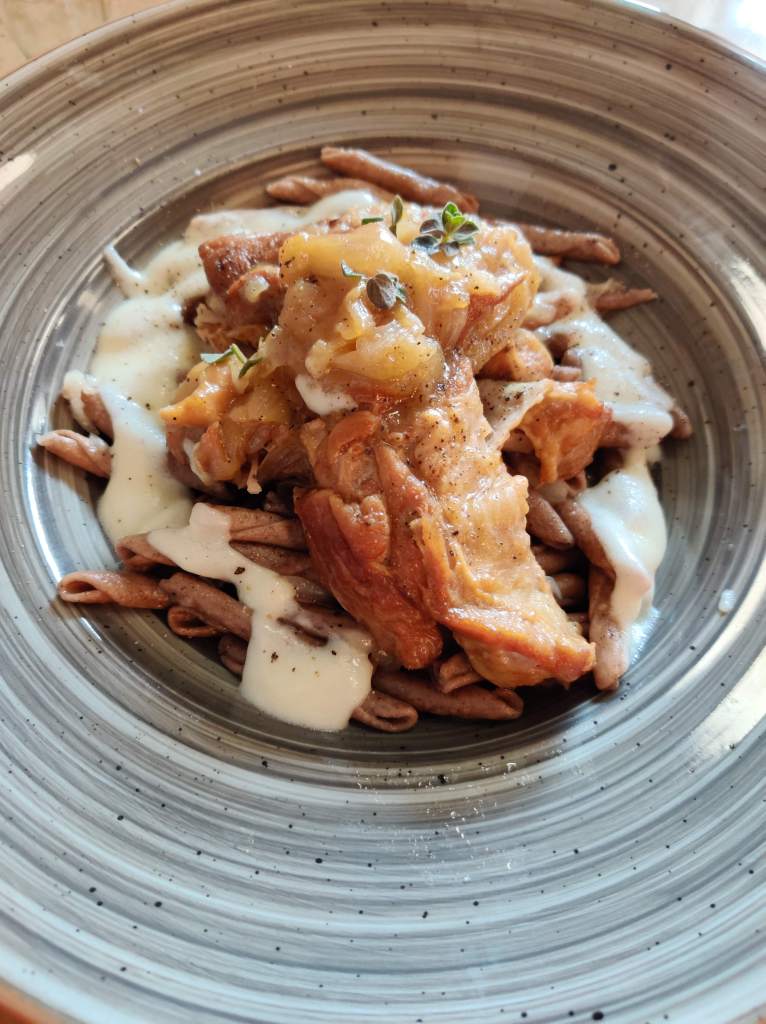
A 20-minute walk away is a gateway to Cretan cuisine: the restaurant Charoupi, which sources ingredients from Greece’s largest island. After a welcome drink of the anise-flavoured local spirit, raki, we dig into an appetiser of cabbage leaves stuffed with rice and herbs, served with a creamy yogurt cheese and olive oil-lemon sauce. My husband savours ravioli stuffed with lamb and egg lemon sauce, while I go for the melt-in-the-mouth sautéed lamb with traditional carob pasta, Graviera cheese and staka (Cretan butter). The fare is nothing like we’ve tasted and only leaves us wishing for more.
TOWER BY THE WATER
We spend our last day in Salonica along its gorgeous three-kilometre waterfront, Nea Paralia, staying close to the city’s beloved symbol—the 112-foot-tall White Tower. In the 15th century the Ottomans reconstructed it from a 12th-century Byzantine fortification to use as a garrison and prison. Called the Tower of Blood, it was renamed ‘White Tower’ after it was whitewashed in the 1890s. We walk up the steep stairway straight to the roof and are greeted with unparalleled views of the city. Back on the ground, a few feet away lies a 20-foot statue of Macedonia’s most famous king Alexander the Great riding his faithful horse, Bucephalus.
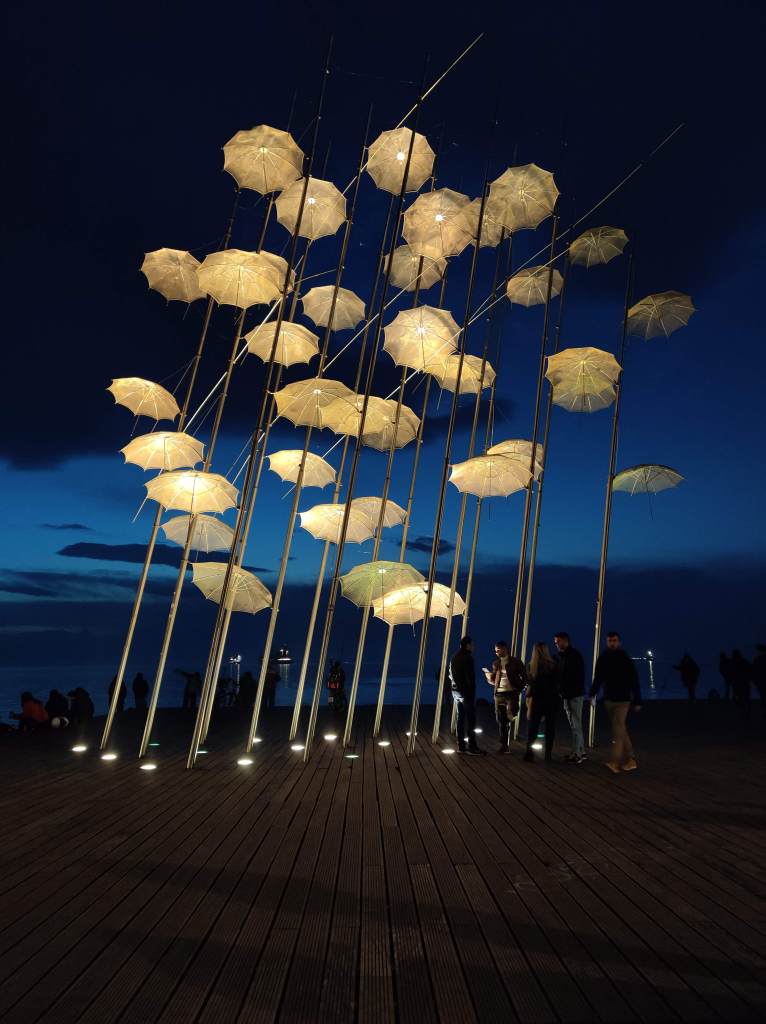
Nea Paralia thrums with buskers, cyclists whizzing by on rented bikes as is the norm in Thessaloniki, and locals fishing along the waterfront. We wonder whether we should take the 30-minute harbour cruise around the Thermaic Gulf or sit at a bench enjoying the seaside view, hoping for a glimpse of Mount Olympus. Finally, we decide to treat ourselves to our final Greek sunset at “The Umbrellas”—an art installation along the harbour that lights up at night. As we click our share of romantic photographs under sculptor George Zongolopoulos’ stainless steel umbrellas in the moonlight, I remember Choumnos’ words: everyone will have a home as long as Salonica exists. And I send out a wish to the city, hoping it’ll beckon us back again, to uncover more secrets.
 Huzan Tata