First published in Verve, June 2016
KAREENA KAPOOR KHAN, actor
For shining strong — despite some misses — and bagging
the biggest banners and hottest heroes since her debut in 2000
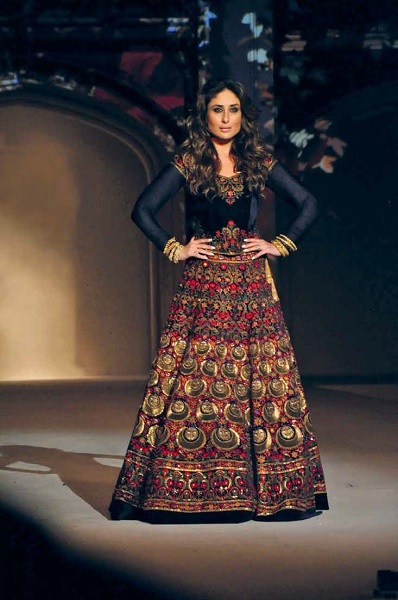
‘Jeena yahaan, marna yahaan’, sang her grandfather in Mera Naam Joker over four decades ago. And Kareena Kapoor Khan lives these words with true passion. In the Indian film industry, where heroines are said to have a ‘shelf life’ of around a decade or so, the feisty actor — who hails from Bollywood royalty, as the Kapoors are often called — has held her own for 16 years and still counting. Randhir and Babita Kapoor’s younger child Bebo (as she has been nicknamed) has proved herself as a worthy flag bearer of the Kapoor surname with her diverse roles and effortless performances, the latest being in R Balki’s Ki & Ka. She may have reduced the number of films she does, but Saif Ali Khan’s begum hopes to face the camera till the day she dies — and probably in her next life too.
“My mother is an extremely strong and focussed woman, who comes from a simple home. Contrary to popular opinion, I had a very middle-class childhood…even now, my mom has a grounded approach to everything in life, be it success or failure. But I’m a lot like my father. He’s funny, gregarious, loves life, and is an outgoing and forthright person. When it comes to advice about anything in my life, my sister (Karisma Kapoor) is the first one on my speed dial. She’s closest to me — we’re actually best friends. My mom always says ‘People want sons to be their tigers but my two tigresses are my tigers!’ I think she’s the most powerful woman in my life, and it will always be that way.”
“The greatest challenge of hailing from my family has been living up to the legacies of famous personalities like Prithviraj, Raj, Shammi, Shashi and Rishi Kapoor, my parents, and then Karisma. It was a struggle for me to be somebody who — when you refer to the Kapoor family — is talked about for being an actor. That was the biggest thing to live up to. And the last 16 to 17 years have been that struggle, and I think it’ll constantly be there.”
“The first time you realise the reach of your popularity is when you face criticism. That’s when you know you’re a star. My granddad always told Karisma and me: ‘If you want to be actors, always realise that they will only write about people who matter. The time they don’t write about you is when you should be worried’.”
“There have been many special moments in my career, but Refugee will always be a landmark film. It was the first time I faced the camera, and it was an unconventional role for a debut movie — it was a real challenge at the time. And a role I would love to play is Uma Thurman’s in Kill Bill. I can’t do it because I don’t have that sort of a flexible body to do those kind of backflips…maybe I’ll try it in my next life!”
“After the release of Ki & Ka, I got home one day from a shoot and Saif told me that I had received a bouquet of orchids and a note, and I asked him why he didn’t open it. He said, ‘When Mr Bachchan sends you a note it’s a moment you must enjoy!’ That will always stay with me. He said it was one of the most natural performances he’d seen and I think that’s a really big compliment coming from someone who is the reason most people from my generation are actors.”
“My perseverance and confidence have aided my success, and the fact that I’ve always been a fighter. I am a little laid-back and like to work at my own pace and on my terms. I don’t come across as someone aggressive, but there’s a fire that’s constantly burning in me. A lot of people have told me, ‘Don’t get married because you’ll soon stop getting work’. But I think I’ve done some fantastic films after marriage, and I hope to continue that always — even after becoming a mother.”
RADHA KAPOOR, Founder and Executive Director, ISDI
For optimising leadership skills to diversify and make a mark in the world of corporates
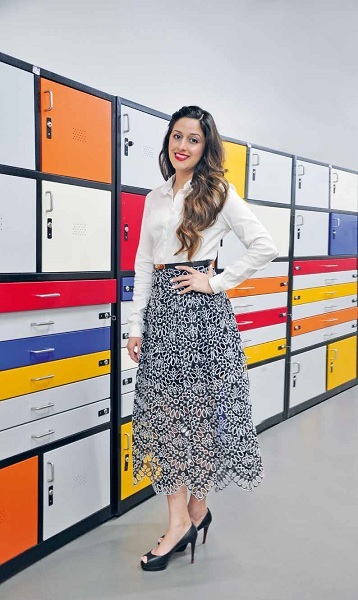
Though she learnt many lessons from her father Rana Kapoor — the head honcho of Yes Bank — Radha Kapoor chose to chart her own path with the foundation of her institution — Indian School of Design and Innovation (ISDI) — three years ago. Armed with a diploma from Parsons School of Design, New York and a degree from University of the Arts London, the young scion has even ventured into retail and sports (her company owns Hockey League franchise Dabang Mumbai and Pro Kabaddi team Dabang Delhi) — but it’s ISDI that is currently Radha’s pet project, which she aims to take to greater heights.
“As a child, while I was aware of my father’s job and status, at home he was always a doting dad to my sisters and me, a caring husband to my mom, and a dutiful son to my grandmother. He was the only man in a house of five women and always made sure we got the best of everything, and that we were never affected by the fact that his entrepreneurship made him successful early on. We didn’t grow up with a sense of entitlement and this instilled the importance of humility in me.”
“My parents noticed my inclination towards the arts, and gave me the right amount of motivation to pursue it, for despite his background in finance, my father is a great believer in creative ideas and their potential. Having a keen eye for design, I went to study at Parsons, and owe it to my parents for helping me make the bold plunge out of my comfort zone. When I was there, I realised that the application and interpretation of design was only looked at aesthetically, whereas it has widespread implications in business strategy as well as in creation of consumer-focussed products and services. This is what motivated me to start ISDI.”
“My father is an honest critic, and the greatest support system I have. I am motivated by the unstinted commitment he has to Yes Bank. He personifies passion and determination, and is definitely a role model for me, and my first port of call for seeking advice. Having been a banker for over 35 years, he has provided financial guidance to corporations of different sizes across geographies, and I am lucky to be able to tap into his wealth of experience. Being an entrepreneur, he perfectly understands what it takes to build a successful institution — and this knowledge has helped me in my own journey.”
“ISDI is definitely closest to my heart. Setting up an educational institution allows me to make an impact over multiple generations, changing the way design and innovation will drive business in the future. We have also started the Indian School of Management and Entrepreneurship and the ISDI WPP School of Communication in partnership with WPP, which is the world’s leading communications agency network. I want to catalyse entrepreneurship and innovation based on the principles of design thinking, which will provide a long-term impetus to the Indian economy. I want to provide an environment for creative entrepreneurs to get access to all the resources needed to make their dreams a reality.”
“Two mantras that my father has shared with me that I always remember are ‘The harder you work, the luckier you get’, and ‘If you can dream it, you can do it’, as Walt Disney famously said.”
ANANYA BIRLA, Founder, Chairperson and Director, Svatantra Microfin
For spearheading India’s youngest microfinance firm since the tender age of 17
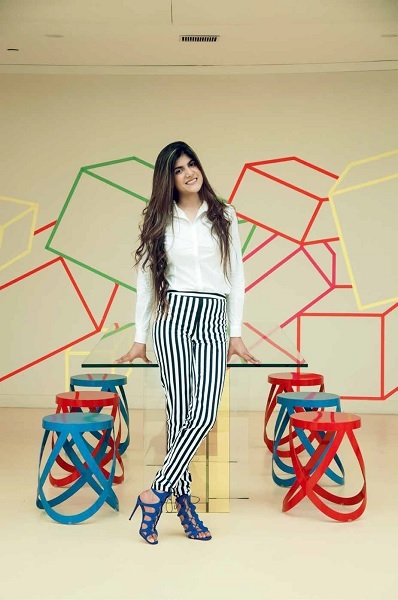
This University of Oxford alumnus has a whole dynasty behind her, but she decided to leverage her business genes, by starting her own firm instead. Neerja and Kumar Mangalam Birla’s daughter Ananya Birla founded her company in her late teens, and today it’s gaining traction as one of India’s best start-up ventures to look out for. The young adult, who recently initiated the Mpower Movement with her mother — that brings to light mental health issues — is using her legacy to drive change.
“I was being homeschooled for my A Levels when I decided to embark on a passionate journey. For me, the most exhilarating part of a start-up is to see an idea take life. Business acumen, the ability to overcome difficulties and achieve success in a business set-up is exciting, no more so than when you start something new.”
“I think there is a huge opportunity to create new services for people who do not have access to them, in a country where close to three quarters of the people live in villages. I love challenges and strongly believe that the key is to change people’s perspectives on relevant matters. We want to have pre-eminent microfinance offers, and are working on technology and innovation. We want to broaden our base from financing entrepreneurs in villages to people who need working capital across the country.”
“I’m really happy I made the decision to set up a company at 17 — I can look back now and say that I have a successful business in an industry that has the maximum risk potential. When I started, microfinance was blacklisted. Right now, it’s trending. We are all focussed on trying to touch the lives of other people and make them feel valued.”
“I’m truly inspired by my family and it’s sometimes tough to think I come from this great line. My dad and I will always be there for each other. We walk hand in hand, but in our unique ways. My family has raised me keeping in mind the most important value in life — selfless love — and I will put in my greatest efforts to keep this growing.”
“I hope to be fearless in the pursuit of happiness — I want a future in which I can rewind and know that I have made the most of each day. The only way to achieve success, in any measure, is by working for all the right reasons. Being genuine and imbibing all the right values is imperative. My youth has both helped and hindered me. Being young makes me restless, but it’s also enabled me to think with a clean slate, develop new ideas, be fearless, and channel my creative energy and innovate.”
“Someone who really inspires me is Oprah Winfrey. But my granddad is definitely on top of my influencers list — the fact that he was the first Indian entrepreneur to go global; he started breaking barriers a long time ago. People who were close to my granddad didn’t associate him only with being one of the brightest entrepreneurs, but also appreciated his pure heart. He genuinely touched people’s lives, and for me that is real achievement.”
“I like to travel whenever I can — especially when it gets you out of your comfort zone. I also love to play the guitar and santoor, compose music and write lyrics. I like listening to music that resonates with the soul. It’s important to keep questioning yourself. Stay in tune with your purpose, show gratitude and be your biggest critic. I really believe in the power of love — it’s the only thing that can break down a man’s ego. To be able to do that can really take you places. I believe love can create magic.”
DIVYA SURI and DEEKSHA SURI, Executive Directors, The Lalit Suri Hospitality Group
For aiming to put their hotel chain on the international map
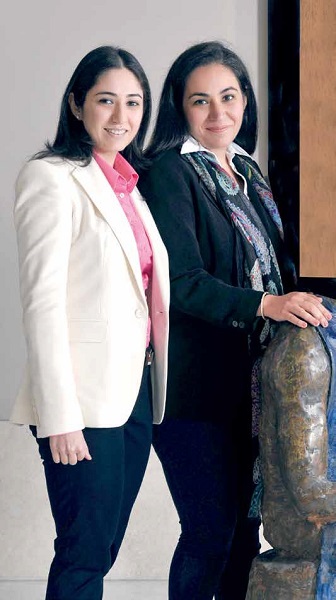
For the Suri siblings, it was a given that they would follow in their father’s footsteps. But with patriarch Lalit Suri’s untimely death in 2006, his daughters had to take control of operations much earlier than anticipated. While Divya Suri handles the company’s legal matters, Deeksha Suri uses her business know-how to spearhead other departments, including human resources, revenue management and sales. The sisters, with their mother Jyotsna and brother Keshav, have propelled their business to much success, and aim to make it a globally recognised name in the coming years.
Sibling dynamics
Divya: “We’ve always been close to each other, and our jobs have only gotten us closer! If I need advice, I go to my husband or my mother, our CMD (chairman and managing director).”
Deeksha: “We were always thick as thieves. Growing up, we shared lots of laughs and great times together. That has not changed.”
Dealing with trials
Divya: “The greatest challenge was to stay true to our father’s vision and take care of the Lalit Group and its people. His values have been a pillar for us through our lives.”
Deeksha: “The expectations and the scrutiny are always tough to deal with. But over time, we’ve learnt how to cope with the pessimism prism.”
Life lessons
Divya: “Hard work, respect for individuals, and attention to detail are prime teachings from our parents. These are our company’s core values.”
Deeksha: “I have learnt to be calm in the face of adversity from my mother; and to be perseverant from my father.”
MEGHNA GULZAR, Director
For tackling sensitive social issues through her work and winning accolades and awards for her directorial venture Talvar
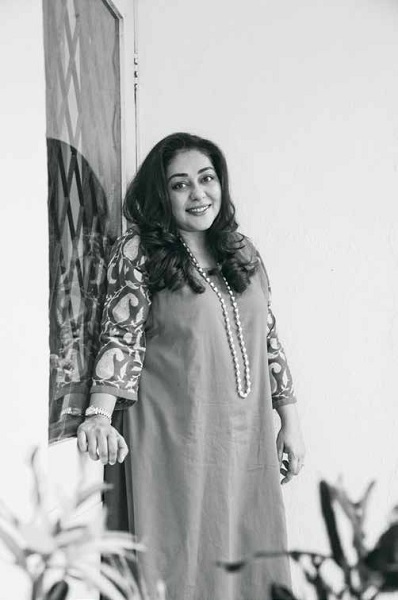
Her father has been one of India’s greatest poets, with five National Film Awards (three for direction) in his kitty. Her mother, a top actress in the ’70s and ’80s, has been lauded for several critically-acclaimed performances. It’s no wonder then that Gulzar and Rakhee’s only child would make her mark in the world of cinema. Meghna Gulzar — who made her debut as a director with Filhaal, a film on surrogacy — helmed Talvar, 2015’s most hard-hitting film. Based on the Aarushi and Hemraj double murder case that held the nation’s attention for years, the movie struck gold at the box office, and was a favourite at film festivals. We’re waiting with bated breath for her next one.
“When you see people admiring your parents or adulating them, you get a fair idea of how appreciated they are in their professional spheres. But at the end of the day, they are a mother and a father at home. My upbringing was fairly normal and there were no excesses. My mother was quite a disciplinarian and kept me rooted, though my father would pamper me a lot. Apart from the fact that they were separated, I don’t think there was anything out of the ordinary in my childhood.”
“By the time I grew up, I was clear I wanted to be a film-maker, or do something in the visual field. It’s quite a coincidence, but I tend to gravitate towards content which is somewhere rooted in the society that we live in. There needs to be a connection — I get drawn to subjects that I hope resonate with the society that we’re making films for. I feel this is important.”
“I wanted to bring Talvar to the big screen because cinema is a very powerful medium. There was so much haze around this case, with different kinds of conflicting information. What we tried to do is present it all in a manner where some kind of clarity could be achieved — or at least start the process for the same. The case still lacks closure; there’s a sense of incompleteness around it. We hoped that when we laid out all the facts and perspectives in a comprehensive manner — it’s been eight years since the incident and yet information came sporadically — things would become clearer.”
“The biggest challenge was the huge responsibility we had, which happens when you’re making a film about a real case. The people concerned are very much alive, and there is a fine line between being critical and being derogatory. You need to observe and express objectively, which is not easy. It’s a subject that everyone thinks they know everything about, or at least claims to do so. It was quite a tightrope walk for us!”
“Being selected at TIFF (Toronto International Film Festival) was the first break we had. And after the cinema release, the way the audience appreciated the film; our shows being increased on a Monday — which never happens with a film of this genre; the critics with their positive reviews…all of it was extremely gratifying. It took me a while to believe it — sometimes I thought it’s happening to someone else! It was very motivating.”
 Huzan Tata