There’s probably never been a better time to be alive than in the highly globalised world that we live in today, with its seamless merging of cultures, societies and beliefs. Women from variegated lineages tell us what’s shaped them and why coming from diverse origins is the new norm
First published in Verve, December 2015
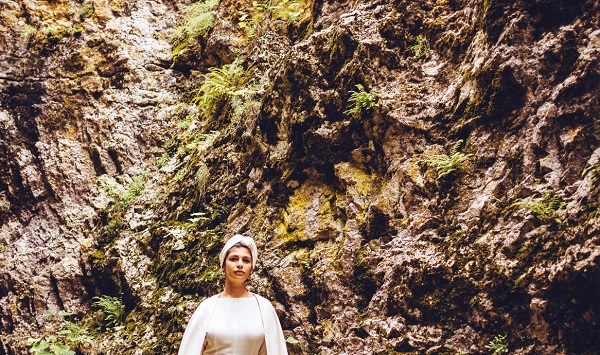
ZAIN MASUD, Art Curator
She’s a prime example of mixed heritage if there ever was one. Her mother is Iraqi-Hijazi, and her father is half Indian and half Pakistani (though born in Singapore). Though her parents are today British by nationality, Zain Masud’s grandparents hailed from Punjab, Singapore, Mecca and Iraq — making this Oxford and SOAS-educated art curator one whose roots
traverse the world.
HER BEGINNINGS
“I was born in Jeddah, Saudi Arabia, to a very multicultural family. I grew up in London, singing hymns at my Church of England school, reading the Quran at home, and going to Arabic classes on the weekends. I was raised to never forget where I am from, yet to see the world as my oyster. I think these things inform my encounters with the world.”
PARENTAL INFLUENCES
“Both my parents have always given priority to education and liberal freethinking. My mother was the first Saudi woman to get a PhD from
Oxford, and has become the region’s most prominent female writer and
political analyst. My father is a MiGflying, self-made businessman who
began a new life in China in his 50s. They broke the mould by marrying out of their communities. I suppose going for something out of the ordinary is what I’ve learned from both sides!”
EAST OR WEST
“Which is my ‘own’ country? London is home and it’s never been a problem.”
BEING DIVERSE
“I’ve just taken it up a notch by marrying an Irish-American from the Caucasus Mountains. Mixed marriage and cultural diversity is the future. It’s made me feel at home in the world.”
MEMORIES OF GRANDPARENTS
“Each of them was devout — religion and traditions were paramount — but in a totally unimposing and un-didactic way. They, like all grandparents, loved to tell stories of the bygone world they grew up in; I grew up steeped in that.”
PAYING IT FORWARD
“It’s crucial to me that if we have a family, our children will speak Arabic
and be close to their grandparents to really absorb the various facets of
their cultures, beliefs and traditions.”
HOME IS
“Wherever my husband is.”
NOSTALGIA STRIKES WITH
“The adhan (call to daily prayers), my mother’s lentil soup, and my father’s
Irish stew.”
COLETTE AUSTIN, Cosmetics Entrepreneur
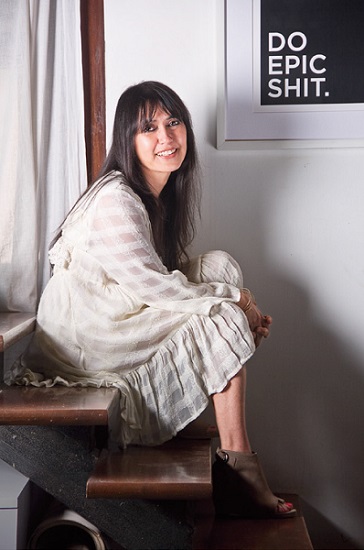
How many people can you find who’d have fascinating family stories from World War II (WWII) as well as the apartheid? For Mumbai-based Colette Austin, whose ancestry reads like a geography textbook — with a British father of Austrian, Italian, French and English heritage and an Indian-born British mother of Khasi (Meghalaya), Assamese, Bengali and Scottish descent — life has been nothing short of learning experiences from the world over. The journey of the owner of the organic beauty brand, The Skin Pantry, is a sum of many tales.
One world for all
“My mother was born and raised in Shillong, Meghalaya, which essentially has a tribal and matrilineal culture. She instilled in us the belief that women are absolutely on par with men. My father, a WWII veteran, was born in Egypt and immigrated to the UK where he lived till the war broke out in Europe. Having seen death and destruction at such an early age, he was averse to boundaries, segregation and racism of any kind. Both my parents made India their home — where I learnt about the importance of family and looking after my parents as they aged, and found a deep sense of spirituality.”
Learning lessons
“My parents instilled in me the importance of freedom. They never interfered with the choices I made, even if they didn’t agree with them. I was allowed to make my own mistakes.”
Linguistic proficiency
“I speak English, Hindi, Khasi, a bit of French, and enough German to get by.”
The ‘beige’ factor
“I was about 10 years old, when my family was on a cruise from Europe to Africa. One of the ports of call was Durban in South Africa, where the apartheid was still on. As the ship docked, passengers could get off to explore the city. The segregation meant that there were separate coaches for dark-skinned and white-skinned people. My mum had dark skin, and my parents were told to board separate coaches on the basis of colour. Furious, my dad approached the port authorities, requesting that we travel together as a family. When they refused, he sarcastically asked, ‘And where do my beige little children go?’ I’ll never forget that. The question he asked stuck with me all my life. Back home, I never understood the caste, colour and community divide that still exists today…but as bad as the news reports get every day, I know a change is coming.”
Multicultural cocktail
“When the roots are so diverse, it’s impossible to be ‘rooted’. My mixed heritage allows me to be multidimensional and multifaceted. It allows for experimentation, flexibility, acceptance and openness, which paves the way for new experiences, influences and exchanges.”
JWALA GUTTA, Badminton Champ
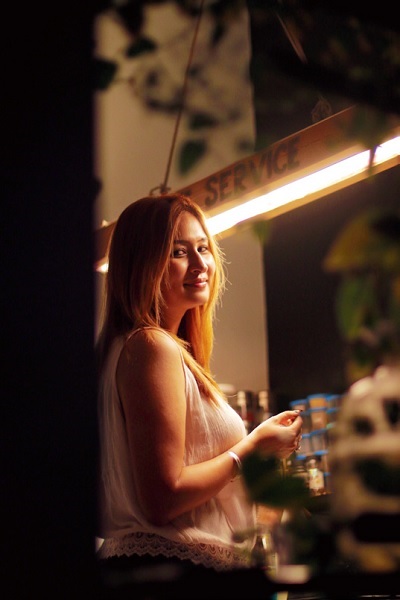
The Arjuna awardee, who hails from Hyderabad, recently became the first Indian player to be in the world top 10 rankings in both the badminton doubles categories — women’s and mixed. With her perseverance a gift from her Chinese mother, Yelan, and love for the sport instilled in her by her Telugu father, Kranti, Jwala Gutta’s reign on the courts is far from over.
Born free
“My parents believe that I am an individual and let me choose what I wanted to do without pressurising me.”
Face value
“I think most people are aware that I have a mixed background. They’d usually think I’m from the North-East. Nobody guesses that I’m Telugu till I start speaking in the language — I speak it quite fluently. But people who are aware of Telugu surnames definitely know of my heritage. Of course, my contemporaries and those in the world of badminton know that my mother is Chinese.”
India calling
“My mom’s parents were never here and I was mainly raised with my Indian cousins and relatives. I was the first girl child. We are not a very religious family, so we never had any set traditions, really.”
Well-fitted genes
“I inherited my looks from both sides and I’m very Indian but I got my grit from my mom.”
Breaking conventions
“When you come from a mixed background, the way you think is very broad and you have an open mind.”
Proficiency in languages
“I’m fluent in English, Hindi and Telugu. I never learnt my mom’s native tongue — I think she forgot to teach me! My younger sister knows it because she lived in China for five years. My mother never pushed me to learn about her culture either.”
Cuisine cravings
“I think I’m very Chinese in that aspect, because I like bland food.”
Source of success
“It is the fruit and result of my hard work.”
Future perfect
“I want to do something for sports in the country, especially for women.”
 Huzan Tata