Defying stereotypical roles in Hollywood, they have grabbed their slice of the spotlight by wowing audiences with their endearing acts on international screens. Actors Sendhil Ramamurthy and Suraj Sharma speak about their Indian roots, journeys to fame, and dream runs
First published in Verve, November 2015

IN PURSUIT OF HEROISM
Sendhil Ramamurthy
Bollywood buffs would probably remember him as the NRI from Shor in the City, but for the world, he’s Mohinder Suresh. The Heroes actor Sendhil Ramamurthy, who hails from a family of doctors, intended to work in the medical field himself — but after an acting course at Tufts University, he ditched the doctor’s robe for life in front of the camera. “Working is my vacation. I never feel like I need to stop working. Even if the project doesn’t turn out as you hoped, the cast and crew are always there to lift you up,” says the 41-year-old.
Ramamurthy — who’s dabbled in television, theatre and films in the UK and USA — has a wish list when it comes to Indian cinema as well. “It has always been a dream to work with Irrfan Khan. I admire his work and choice of roles immensely. I would love to work with Raj Nidimoru and Krishna D. K. (directors, Shor in the City) again. They have been doing really well since Shor…if they ever wanted to do another movie together I would jump at the chance.” The actor, who believes it is easier today to land roles that defy stereotypes, will be seen reprising his character Suresh for a story arc in the mini-series Heroes Reborn, a sequel to Heroes. “I’ve seen bits of it and it looks impressive. It’s visually stunning…the new cast seems to be as excited as we were when we started. I hope fans enjoy it,” he shares.
For now, the USA-based star has his hands full, with comic book genius Stan Lee’s 10-part series Lucky Man premiering in 2016, and the film A Momentary Lapse Of Reason by Aditya Bhattacharya, for which he shot in Hyderabad last summer. “I seem to make it back to India once a year for some kind of work, whether it is interactions with the press or actual shooting. I hope to go back for more filming in the near future,” says Ramamurthy. Ask him to pick between the big screen, the idiot box and the stage, he says he enjoys each one equally, “but if I have to choose, it would be theatre, because there is immediate feedback from a live audience”.
Smart, suave and sexy, Ramamurthy is today one of the most recognised artistes of Indian origin. Surely he’s been spotted on the streets by swooning fans? “People are generally nice and just want to say ‘hi’ or take a quick picture. I enjoy greeting fans, but being a very private person it wasn’t always the case! After all, they’re the reason I get to do what I love to do and have the life I have. I’m grateful.”
Hailing from the Subcontinent — his parents are Tamil and Kannadiga — the performer does keep up with what’s happening on this side of the globe. If he had to define India in one word? “Vast. Vast beauty, culture, intellect, poverty, wealth, untapped resources and widespread antiquated thinking about women and caste. I really think there is serious potential for India to be a world leader in the future…with all that India has to offer the world, it would be a shame if it isn’t able to overcome its current limitations, namely poverty and lack of education for the masses — girls in particular. One can solve the other.”
And though he’s Indian by heritage and American by birth, Ramamurthy’s outlook isn’t bound by borders. “If you care about others you are a global citizen in my book…. We should be taught from a young age that it’s not a burden to help others but something that is natural and to be celebrated.”
CROSSING BORDERS
Suraj Sharma
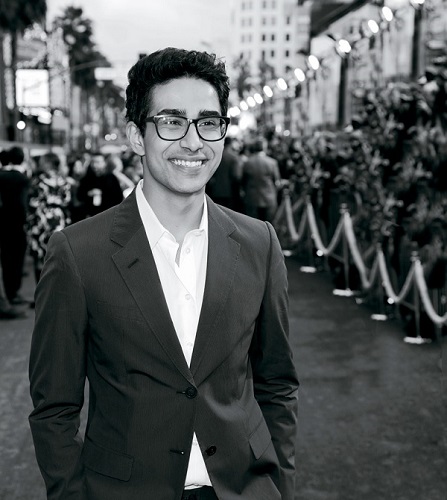
For Life of Pi, Suraj Sharma filmed most of his scenes with a CGI-generated tiger, and yet made them — and the emotions — seem real. It’s no wonder then that the youngster has since been offered many challenging roles after his debut and pulled them off with relative ease. Whether it be the intriguing Aayan Ibrahim on the American television drama Homeland, or Rinku Singh in Million Dollar Arm, Sharma’s characters in international productions have made him a recognised face on the global stage. The 22-year-old Delhi-born lad — who won the Pure Heaven Outstanding Young Talent Award at this year’s London Indian Film Festival — talks about his life in the lanes of Hollywood.
What was your reaction when you landed the titular role in Life of Pi?
When I was a kid, I never thought acting was a real option. I wanted to be a footballer, but that didn’t work out. Being a part of Life of Pi (LOP) wasn’t something I could ever get my head around — it feels surreal to this day. All I know is that I’m a very lucky guy.
Your most memorable moments from shooting LOP?
I can’t pull a memory and say it’s better than any other. The entire experience was one expansive, insane dream. The tank, the tigers, the boat, the raft, the crew, shooting in Taiwan…. I loved every bit of it. Pi was my most challenging role and my favourite one too. The things I learned from Ang Lee and everyone else on that movie are keeping me afloat today.
What’s the best part of being an actor?
The best part about acting is definitely the people you meet, the places you go, and the variety of things you get to do on set. You learn every day. When the hours get long or things go wrong and you get tired, you know there’s a whole crew of people from all walks of life, who have worked twice as hard as you did, who woke up earlier than you and went to sleep later. That’s more than enough to keep me going.
Are there any challenges in being a South Asian in world cinema?
Obviously, being South Asian provides a set of problems when it comes to jobs on screen. Firstly, there is an automatic bias towards comedy for South Asian actors and most of the comedy is usually a little racist. Typecasting is a constant fight. Secondly, there is a drive towards diversification on the big screen. On the one hand it means that there are more roles for South Asian people outside Bollywood, which is great. On the other hand, the idea itself assumes the primary need for a racial mix, which puts race first and skill second. This means it’s not always in favour of an actor who plays a specific role the best, but rather ticks the checkboxes on a racial menu. The situation is getting markedly better today and we’re moving towards a better distribution of talent. More people’s voices are being heard which will mean better things for everyone. Plus, with the inevitable rise of independent cinema in India, things are looking up.
How does finding fame in a foreign land affect you?
My parents have been super supportive of everything so far. Of course they are sceptical about the idea of ‘fame’, but so am I. I’m just trying to do a good job on set and make a few friends along the way. Telling a beautiful story is what it’s about at the end of the day — that’s what we hope to work towards. All the other stuff isn’t the focus.
What’s next?
I just finished shooting a film called Burn Your Maps by American screenwriter-director Jordan Roberts. The shoot was extremely fun and the people I worked with were incredible! I’m keen on seeing how it turns out. I’m busy with college in New York City but am reading scripts all the time.
Would you work in mainstream Hindi films?
I’m open to all languages. I just look for a script with good characters, and a film backed by a good team. That’s what matters to me.
 Huzan Tata