What is a book if it doesn’t make you ponder and contemplate after a read? In conversation with authors Richa Kaul Padte and Shobha Rao on their thought provoking books Cyber Sexy and Girls Burn Brighter respectively, we learn about unspoken-of worlds and emancipating tales
First published in Verve, June 2018
OPENING NEW DOORS
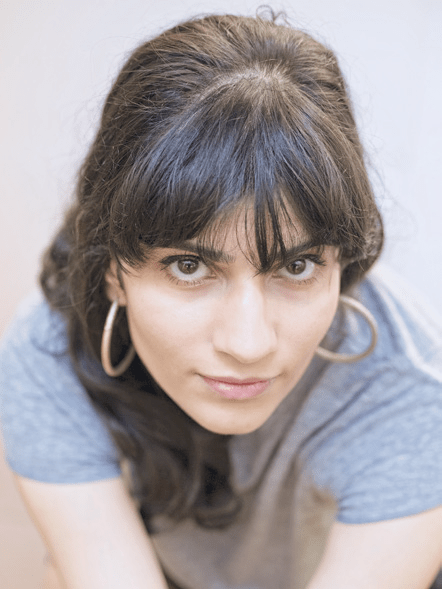
Richa Kaul Padte, CyberSexy

What was the impetus behind writing a book on porn?
Ever since two pornography bans were proposed in India in 2013, I wanted an Indian woman to write a book that talked about what porn and the internet meant for sexuality, and why they weren’t inherently bad for women. I spent at least a year waiting for someone to announce they were writing this book. And when no one did, I got this weird feeling that it might have to be me. What I ultimately tried to do with Cyber Sexy was write the book I wanted to read.
Did you have any kind of apprehensions, given that talking about sex openly is still relatively taboo in India?
My thinking around sexuality comes pretty much straight from the women’s movement in India and the UK, which I’ve been a part of for nearly a decade. Talking publicly about sexuality isn’t new for me, the only difference is that now I’m doing it in a more mainstream way. And because I’ve been doing it in spaces that have been so supportive and progressive, I was able to bypass the types of apprehensions that come with being an Indian woman writing about sex.
Do you hope the book will open up more channels of conversation?
I think that would be absolutely amazing — if it gets people talking! I think it’s really important to have open conversations around sex. Because a big problem with sexuality in India is that it’s treated as something dirty, immoral, and best avoided. Having these conversations is crucial to developing healthy, safe, and pleasurable sexual relationships. And if Cyber Sexy encourages even a handful of people to talk about things they’ve never said out loud, that would be an incredible outcome.
What are the anecdotes that really stayed with you?
I really liked Sasha’s story, which you can find in the chapter Homemade. She grew up in a conservative small town, and she moved back there as an adult. It was quite an isolating experience for her, because there was no one she could relate to. But she found an amazing community online, where she began posting sexy pictures of herself. The way she described those experiences as so comforting, intimate, and empowering really stayed with me. It’s a lovely example of how nurturing the internet can be for women’s sexualities.
Was it easy to get the women to talk about their experiences openly?
Yes! This was one of the happiest and unexpected things that happened over the course of writing this book. I knew that there would be women who engaged with the ‘sexy’ internet, and I figured some of them would be up for discussing it. But I didn’t foresee the level of openness with which they would tell me their stories, because it’s difficult to talk about sex if you’ve always been discouraged to do so. It’s uplifting to know that Indian women are way more comfortable in their sexualities than we give them credit for.
Talking about one’s porn watching habits comes quite easily to some, while others feel shame in admitting it — why so?
For males, porn watching is often seen as a natural part of life, whereas for women, it tends to happen through the lens of shame. Men are more likely to talk about it than women, though that doesn’t mean they’re watching more or less of it. Just because men talk about porn doesn’t mean they’re being honest or vulnerable in these conversations. What’s needed is a shift in the way we look at sex itself, before we can shift the way we talk about porn.
The book covers topics ranging from consent to fan fiction — which one fascinated you the most?
I’m glad you mentioned fanfics, because I think they were my favourite discovery. I vaguely knew it existed, but I had no idea how wonderful it could be. I was especially fascinated by slash fiction, or queer romantic pairings between characters who are known to be straight — Draco Malfoy and Harry Potter for example. Search for ‘Drarry’ online and you won’t be disappointed!
How would you ‘reimagine’ pornography?
Making porn is illegal in India, which means everything is created under the radar. So if I were to reimagine pornography, I’d picture it as a space that foregrounds pleasure, decriminalises desire, and actively works to prevent and punish violations of consent. Porn can be a beautiful space, but it won’t ever be that space if we keep seeing sex as immoral and obscene.
What makes you feel empowered? How liberating is it to talk about your experiences in a book?
When I can walk down the street wearing what I please, and feeling like I have the right to be there as much as any man is a difficult thing to experience in India, but whenever I do, I feel my spirit soar. I don’t know if talking about your experiences is liberating or not. It’s definitely scary, to put so much of myself out there. But I was asking a lot from my interviewees: their desires, and fears. And if they were able to give so much to a stranger on the internet, the least I could do is be honest about my own experiences too.
CyberSexy: Rethinking Pornography is published by Penguin India.
RISING WITH RESILIENCE
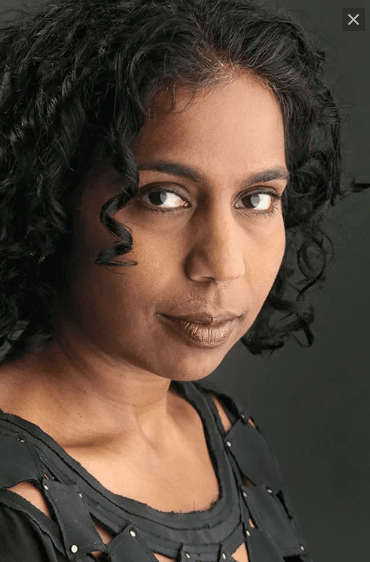
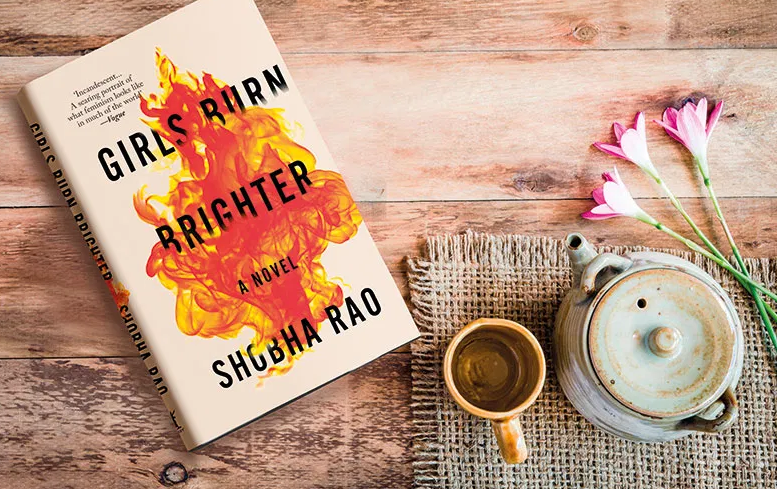
Shobha Rao, Girls Burn Brighter
Where does the inspiration for Girls Burn Brighter lie?
In the world as experienced by the poorest, the disenfranchised, the most marginalised…because that, too, is our world. We have an imperative, compassionate obligation to imagine lives that are not our own. For me, that meant looking around, and seeing the many vulnerabilities and challenges of what it is to be female, in certain sectors of society. It meant looking beyond the comfortable edges of my own life.
Were your characters based on real people you’ve encountered?
Undeniably, my characters are based on real people: the young girl looking lost at the train station, the mendicant on the corner, the battered women who walk the streets beside us. All of them feed our river of understanding, empathy, and my writing life. But none of my characters is based on one particular person, though working for many years with victims of domestic violence gave me a sense of what horrors we hold in our hearts, our bodies, and the privations that infect each of our lives. It also gave me some recognition of our endurance in the face of these horrors, our resilience in the face of unrelenting abuse. Savitha and Poornima get their determination and their grit from these women I’ve met, from the light in their eyes that refuses to be extinguished.
While the problems the girls face — abuse, assault — are universal, you chose to have your characters come from the villages of India — why so? Do you identify with India as ‘home’?
I think when one emigrates the idea of home is shattered. No single place will ever be home again. But I turn to India again and again in my fiction, as it is the country I lost. What we have lost will always hold an allure, a near-constant seduction. Beyond that, as any woman, I look at the statistics of (reported) rape and sexual assault in India and I am heartbroken, disgusted, and outraged. This novel is my dirge and my bellow.
Who is your favourite character and why? Which one was hardest to write?
Asking me to choose a favourite character is like asking me to choose a favourite limb! But certainly, creating both Savitha and Poornima was such a joy. I delighted in watching them grow up, persevere, trade sorrow and strength between them with such love, such hope. As if sorrow and strength, as if love and hope, were simply handkerchiefs they passed back and forth. Isn’t that, after all, what friendship is? Mohan was probably the hardest to write. To create a character who traffics women and exploits them horribly, but nevertheless has a streak of tenderness in him, and the benevolence to help the very woman he’s trafficked? That was a challenge.
The story was left quite open-ended. Will readers see more of Savitha and Poornima in the future?
There would be a magnificence in Savitha and Poornima finally meeting, after so many years apart and after all that they’ve endured, a magnificence that, to me, would be beyond words. Some rare moments in life are like that: so achingly beautiful that we are left speechless. We are left suspended in the nothingness and everything-ness of that moment. It is good to know those moments; it is good to know great silence. As for seeing Savitha and Poornima in the future, I have no plans either way! But if I were to do so, I would first want us — all three of us — to age, to wait, to watch the years, and only then would I want us to encounter each other again.
Do you see Girls Burn Brighter as a feminist novel?
If we are to understand feminism as the advocating of equal social, political, legal, and economic rights for women, then the air I breathe is feminist. The water I drink is feminist. Every word I write and will ever write is and will be feminist. So yes, Girls Burn Brighter is a feminist novel.
If you had to give readers one reason to pick up your book, what would it be?
There is no reason, or there is the most ancient reason of all: we are sitting in a cave, there is a fire, outside it is dark and wild animals roam. Let me tell you a story, I say, and let’s get through this long night together.
What makes you feel most empowered?
Empowerment is a state of being. It is the sheer astonishment of knowing your own worth, knowing that you are infinite, that you are immensely capable, and downright unstoppable. What makes me feel empowered is the witnessing of another’s power. A power that is inward, answerable, thoughtful, respectful, and one that understands the fragility and courage of what it is to be human.
What are the themes you enjoy reading and writing about?
I love stories of journeys — the journey of a mouse toward a piece of cheese, or the journey of two people towards love. It is while we are journeying that we are made more alive, more inquisitive, more lonely, and also more limitless.
One author who has had the greatest impact on you as a writer?
There have been so many — Elfriede Jelinek, Laura Ingalls Wilder, Kamala Markandaya, Forough Farrokhzad, Clarice Lispector, Simone de Beauvoir, and on and on. Each one gives me courage. Each one of them says, ‘Write something true’.
What can we expect next from you?
I wish I knew. But I was thinking vaguely, somewhat trepidatiously, of turning my gaze towards the United States; of exploring a different kind of richness. Because it’s inaccurate to say I lost a country. What happened, in truth, is that I gained a new one.
Girls Burn Brighter is published by Fleet.
 Huzan Tata