There’s a certain familiarity when you look at the artworks of Pakistani artists, owing to their country’s shared history with India. Striving to make a mark in the contemporary art world, they are emerging as names to watch out for in the international arena. Four promising talents talk about their inspirations and their South Asian heritage
First published in Verve, July-August 2018
SALMAN TOOR
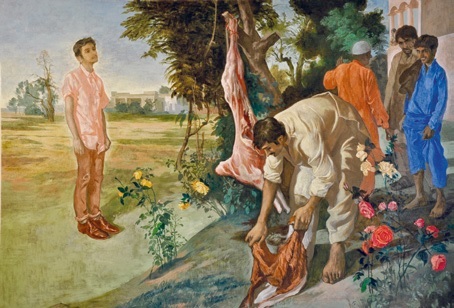
Armed with a master’s in fine arts from NYC’s Pratt Institute, this 35-year-old straddles two continents with his art, and considers it an achievement that he’s made “this dual life in New York City and Lahore” work for him. Inspired by pop culture from both the Subcontinent and the Western world, Salman Toor enjoys painting “stories in picture-book style”, usually working with oil paints on canvas or wooden panels, and looks to represent South Asians who, like him, are living a life that’s in between cultures. The pigeonholing of artists from South Asia being his greatest challenge, Toor hopes to portray both the ordinary and the unusual that’s associated with his homeland in his works.
Creative Beginnings
“I started drawing when I was very young, and found it to be the most exquisite escape and means of invention. I represent stories of brown people living between two cultures, created using an illustrative — sometimes abstract — style of painting which has the potential to tell our stories and show our wishes, our sensuality and our bodies in art that is exhibited on a global scale.”
Early Influences
“Because I grew up in Lahore, I was exposed to the idea that miniature painting was a cliche, since it was seen everywhere. I still found inspiration in 16th- and 17th-century artists like Nainsukh and Bichitr and the child prodigy Abul Hasan in the employ of the Mughal emperor Jahangir. I have often appropriated the idea of text as a seamless part of an image from this tradition which is free from European rules of painting, like perspective. The storyteller in Indian painting is free to change points of view within a single work, as he doesn’t set out to imitate nature or have a fetish for light. I used to have a fetish for light. I saw European painting as completely foreign, yet familiar. I grew up in my grandmother’s house, which was full of cheap prints of portraits by Thomas Gainsborough and even roundel paintings of the 17th-century painter Paul de Vos. These prints bring a kind of genteel element to many middle-class homes and in a sense I was trying to discover what that was. These white people in their frames absurdly stood sentinels to the goings-on of a Lahori middle-class home with its tea, its servants, prayers and biases.”
Artistic Inspirations
“I find inspiration particularly in 16th- to 18th-century European paintings. I like the obvious stars of those art centuries like Peter Paul Rubens, Diego Velázquez and Johannes Vermeer, but I also respond to painters considered more ‘light’ like Paolo Veronese and the Carracci brothers, as well as popular Italian and French painters like Pierre-Antoine Quillard, Pietro Longhi and Domenico Fetti. What I like about their pictures is that they’re so fresh and fun. They mix up tales of morality or portraiture and decoration.”
Traversing Themes
“I usually look to portray brownness and queerness in my art. Using my own experiences, I attempt to explore selves and perceptions that oscillate between ‘Potentially Dangerous Muslim Man’ to ‘Queer And Harmless Cultural Ambassador’. I like to believe that I am illustrating a storybook for adults, adding to a repertoire of stories already in existence about South Asians at home and abroad, but my stories are more about the periphery and the unusual. I attempt to inject these new ideas into the slipstream of contemporary painting which has limited ideas about us.”

Portraying Pakistan
“My identity is certainly part of my art and I don’t find it to be a nagging responsibility. Rather, it comes quite naturally and I find it exciting. But I also make pictures and collages that have nothing to do with my identity or representation. As a principle, I follow my interests.”
Pakistani Art In A Global Sphere
“There is a greater interest in studying ways in which artists from Muslim cultures look at the world, and the ways in which this regional art bridges the gap between postmodern art movements that have occurred in the developed world. Pakistani art is now thought to be surprisingly sophisticated and occasionally obvious. This new interest is reflected in mid-career retrospective shows, and in inclusion of Pakistani artists in biennials and triennials all over the world. As I write this, there is a Huma Bhabha sculpture on the rooftop of the MET Museum called We Come In Peace.”
Around Town In Lahore
“I would tell visitors to go see the Lahore Fort, and the Badshahi Mosque. There’s also the Lahore Museum, galleries like Rohtas II, O Art Space Gallery, and Canvas Gallery Karachi. But most of all I would recommend home-cooked desi food in Lahore. Outstanding.”
On The Wall At Home
“I have three or four very old paintings in my apartment. I’m surrounded by art all day, so I try to keep my personal space free of it. If I could own any painting it would be Velázquez’s Los Borrachos or The Drunkards. And I would also own a romantic scene by Jean-Antoine Watteau, perhaps The Scale of Love. Some contemporaries whose works I follow are Shahzia Sikander, Louis Fratino, Faiza Butt, Ali Kazim, Lynette Yiadom-Boakye, Kerry James Marshall, and Nicole Eisenman.”
Muhammad Zeeshan

The artistic era of 18th- to 19th-century Paris is a time he would have loved to live in if he were allowed to fulfil his fantasy, but it’s still his identity as a South Asian that defines Muhammad Zeeshan and all his art. Hailing from Mirpur Khas district but now based in Karachi, the 38-year-old holds a degree in miniature painting from the National College of Arts, Lahore. His multidisciplinary practice sees him work in video, collage, drawing, and installation art — his preferred medium these days being laser scoring and sandpaper. He believes that art cannot and should not have any boundaries. And his works are usually charged by the political and social milieu around him.
Creative Beginnings
“I wanted to convert my passion into a profession so from a painter I trained to become an artist. As a young boy, I used to indulge in games like dog fighting, cock fighting, and pigeon keeping (I owned more than 100 pigeons at one time). These activities taught me patience. I find myself referring to those times constantly while creating work and looking at art.”
Artistic Inspirations
“I enjoy works of directors creating parallel cinema. It could be in any language and in any genre. For me, inspiration could come from anywhere and at any time. You can’t force it, you can’t plan it. It is as random as the next breath.”
When Not At Work
“I watch lots of Bollywood movies. I think movies are a complete package, where literature, writing, visuals, lights, sound, theatre, performing arts come together to create an interesting dialogue or set of events. Watching movies helps me unwind, enjoy and absorb things on a subconscious level.”
Portraying Pakistan
“My art is intrinsic and comes from an intuitive level, where at times I surprise myself with the kind of images I choose to create and therefore I don’t believe or see my practice as separate from my identity. It represents me and all that is connected with me. Therefore, yes! My heritage, its history, its culture defines me. Which history am I allowing myself to be informed from? The land I belong to dates back to 7000 BC, and I proudly own and accept all its stories, and its past, present and future.”
A Story Of Shared Histories
“The Subcontinent is a beautiful amalgam of many cultures. Due to trade, economics and patronage, we find substantial influences of various cultures that the erstwhile kings or emperors were generously introducing and accepting. My root practice of miniature painting was privileged enough to have had all these influences and developed styles which inform us beautifully as artists today.”
Facing Backlash
“South Asians are not the only ones facing problems. Censorship, backlash, class factors — we find these around the world, in many countries. The First World countries have a higher number of these, I assure you. As for how I tackle them? I think they tickle me!”
Greatest Achievement
“I experienced the boom of the art world and gained a lot from it and also experienced the toughest economic crunch of this market as well. I believe I can call myself a veteran.”

Pakistani Art In A Global Sphere
“Good art shall always nourish and nurture wherever it is perceived in the world. Pakistani art has been doing a great job for a long time now on many levels. We have artists of the diaspora creating a wonderful dialogue. We have old masters informing the auction houses, followed by young talent aspiring to travel the world to gain experience and be heard. This is a pronounced expansion.”
Love Thy Neighbour
“Pakistan’s Sufi saints’ history and heritage is a wonder to experience. I would heavily recommend discovering those sites, which are located all around the country. Coming to India is always desirable for me. It is eternally enriching and I consider it my second home. I have travelled to many cities in India over the past two decades. I still have so much to see.”
On The Wall At Home
“My walls wear a series of nudes, which I have been patiently collecting for the past 10 years. I’d love to own Salvator Mundi by Leonardo da Vinci, because it is the most expensive painting ever auctioned.”
SAQIBA SULEMAN
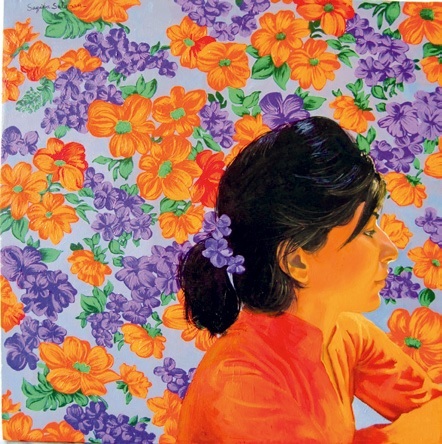
Tending to her two little daughters takes up most of her time at home, but in her free time, you’d find her brightening up a canvas with her brushes. Saqiba Suleman, hailing from Hasilpur in the Punjab province and now based in Lahore, entered the art world ‘by accident’, after attaining a gold medal and a master’s in fine art from Lahore’s Punjab University. Vibrant florals and the female form are essential elements in most of her paintings, and she mainly works with oils or acrylics. One who’d have loved to have lived during the times of Claude Monet and Édouard Manet — “the colour composition and the style of painting in their works are unreal” — Suleman feels a great sense of responsibility towards society as an artist.
Creative Beginnings
“I accidentally stumbled into this field. During my college days, there used to be limited number of classes that taught sketching and techniques to apply oil paints. Teachers at my college appreciated my natural knack for it. My family also encouraged me to pursue my talent seriously. I got admission in Punjab University and once I was there, my teachers had a major role in helping me identify my style. What began as an inspiration from the works of my teachers went on to become a style of my own.”
Traversing Themes
“My style combines three-dimensional figurines with two-dimensional floral backgrounds. What comes out of this merger is what satiates my creative sense. The use of deep variations and subtle gradations of light and shade aims to enhance the projection of the character. Most of my works revolve around the portrayal of a feminine figure, hence I attempt to uncover the impact of external elements, be they society, parents, or children, on the individual. This becomes particularly important in our strongly patriarchal society when that person is a woman. Sometimes, this impact can strengthen their resolve, and sometimes it can devour their individuality. On another level, my works also showcase my journey as an artist. This journey is a continuous one.”
Artistic Inspirations
“I am a huge admirer of the works of Iqbal Hussain and Saeed Akhtar. Their art primarily revolves around figurative works. Their use of colours, their compositions, and the way they draw the contours of human bodies are what I admire the most. I would love to own artworks by Vincent Van Gogh, Akhtar and Hussain and I also look up to the works of Felicia Forte and Andy Espinoza.”

Portraying Pakistan
“I do take inspiration from the legendary icons of fine arts from my country. They don’t consciously define my art but, yes, their works do influence the way I paint. I paint the way I perceive things. As I live in Pakistan, it is inevitable that the country would be represented — though I never forcefully represent it. My art, at a certain level, represents the kind of society I hail from. The general psyche of the society in the Subcontinent is similar, so I would say that my works represent shared tenets of society on both sides of the border.”
The Importance Of Art
“In the telling of history, I think art is extremely important. Where historians tell facts of the historical happenings, artists indulge in extricating the human nuances involved. Without artists and their works, the history of any nation cannot be fully comprehensible.”
Challenges And Achievements
“The greatest challenge in our industry has to be the preservation of one’s identity as an artist. Many a time, I have seen richly talented artists relegated to the fringes simply because one group of artists is more dominant. My greatest achievement so far has to be the shortlisting of my painting for Artrooms Fair London 2018.”
Pakistani Art In A Global Sphere
“Nowadays, South Asian artists get far more exposure than what they used to a few years ago. Yet, I believe that there is very little interaction between Indian and Pakistani artists. Both can learn a lot from each other. Pakistani art has seen an applause-worthy response in the field of calligraphy. Figurative painting has also been on the rise. Today, more than ever, people can relate to an artwork without wondering about the artist’s place of belonging.”
Art Around Town
“I would recommend a visit to Lahore, which is the cultural hub of Pakistan. Stops at the Alhamra Arts Council, Lahore Museum, and the Badshahi Mosque are a must. In Islamabad, don’t miss Tanzara Art Gallery for works by contemporary artists. In India, I would love to visit all the major cultural sites which I read about as a student.”
KOMAIL AIJAZUDDIN
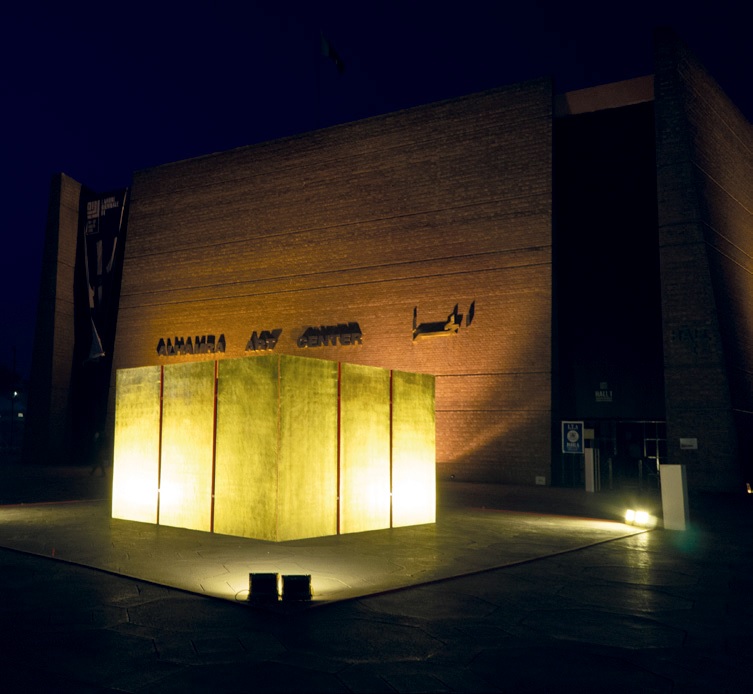
“My greatest challenge was probably working up the courage to pursue art full-time. My advice is to not have a backup plan, because if you do, you’ll use it,” says this NYC and Lahore-based visual artist and writer, whose practice primarily focuses on the portrayal of religious art. Komail Aijazuddin — who has degrees in art and art history from the prestigious New York University, and an MFA from Pratt Institute in New York — has showcased his creations around the globe from Tel Aviv to Brooklyn, and is a master of gold-leaf work that can be seen in several of his canvases. An artist who’s dabbled in painting, wax work, drawing and installations, he can be found “writing, reading, eating, or conspiring to go on vacation so that I can do all three on a beach” when he’s not toiling away in the studio.
Creative Beginnings
“I grew up in a home that valued art. Like most kids, I loved to draw but unlike most, I never stopped. I studied art and art history all through school and university, but I think I officially decided to go into an MFA programme to become a professional artist at 22. I realised that if I had to do something for eight hours a day, it might as well be something I truly loved doing. I discovered fairly quickly in life that I am not made for desk jobs.”
Traversing Themes
“My work combines vocabulary of religious art from different traditions in an effort to understand modern concepts of identity and faith. I’m particularly interested in what people consider sacred and why. My practice is cross-disciplinary, and includes painting, drawing, installation and sculpture. I was trained in classical figure drawing, and figures are still a large part of my art. I’m interested in the idea of blasphemy, not simply in religion, but also in how common ideas and identities can take on the reverence of religious tenets.”
Portraying Pakistan
“My work began by exploring the iconography of Shia Islam, and that was a direct result of how I was raised in my country, but I don’t believe fine art needs to be representative of anything beyond the individual who made it. Your work may come from something intimately particular to you but the hope is that whatever you create will resonate with people because of their own experiences.”
Shared Histories
“I’d say the art of a period is very important in the telling of its history, mainly because our history (and for that matter our art history) is the same before Partition. I am often reminded of Amrita Sher-Gil’s work which made a big impact on me as a child, both because she was a figurative painter but also because she was from Lahore.”

The Issues Of Art
“Self-censorship can be an issue for any artist, regardless of where they come from. I don’t think I have had any major restrictions of censorship placed on my work. That said, I think that South Asia has a strong sense of what’s considered appropriate (particularly with things like nationalist and religious identities) and I feel that sometimes interesting work can come from playing within the limits of that framework and testing how far they can be expanded.”
Pakistani Art In A Global Sphere
“It’s doing extremely well, I think. There are dozens of fantastic, talented people doing amazing things at home and abroad and it’s a global force. But what I am most proud of is that so much of it is so thoughtful, innovative and universal.”
Art Around Town
“I work in Lahore which is a historical, beautiful city. It’s home to the Lahore Museum, the Lahore Fort, Jahangir and Noor Jehan’s tombs, The Walled City, Shalimar Gardens, the Shakir Ali Museum and more. To say nothing of the food, which itself offers a transformative experience.”
On The Wall At Home
“Strangely, I don’t have many pieces up on my walls, probably because I work with images all day and sometimes it’s a relief to stare at a blank space. But I do love collecting drawings, particularly sketches or preparatory studies.”
Future Forward
“I’ve just finished a solo show and a public sculpture in Lahore, where I built a large cube of gold leaf, so I’m taking some time off to work on some writing projects in New York. I intend to get back to the studio to work on my next few exhibitions, hopefully with a holiday tan.”
 Huzan Tata